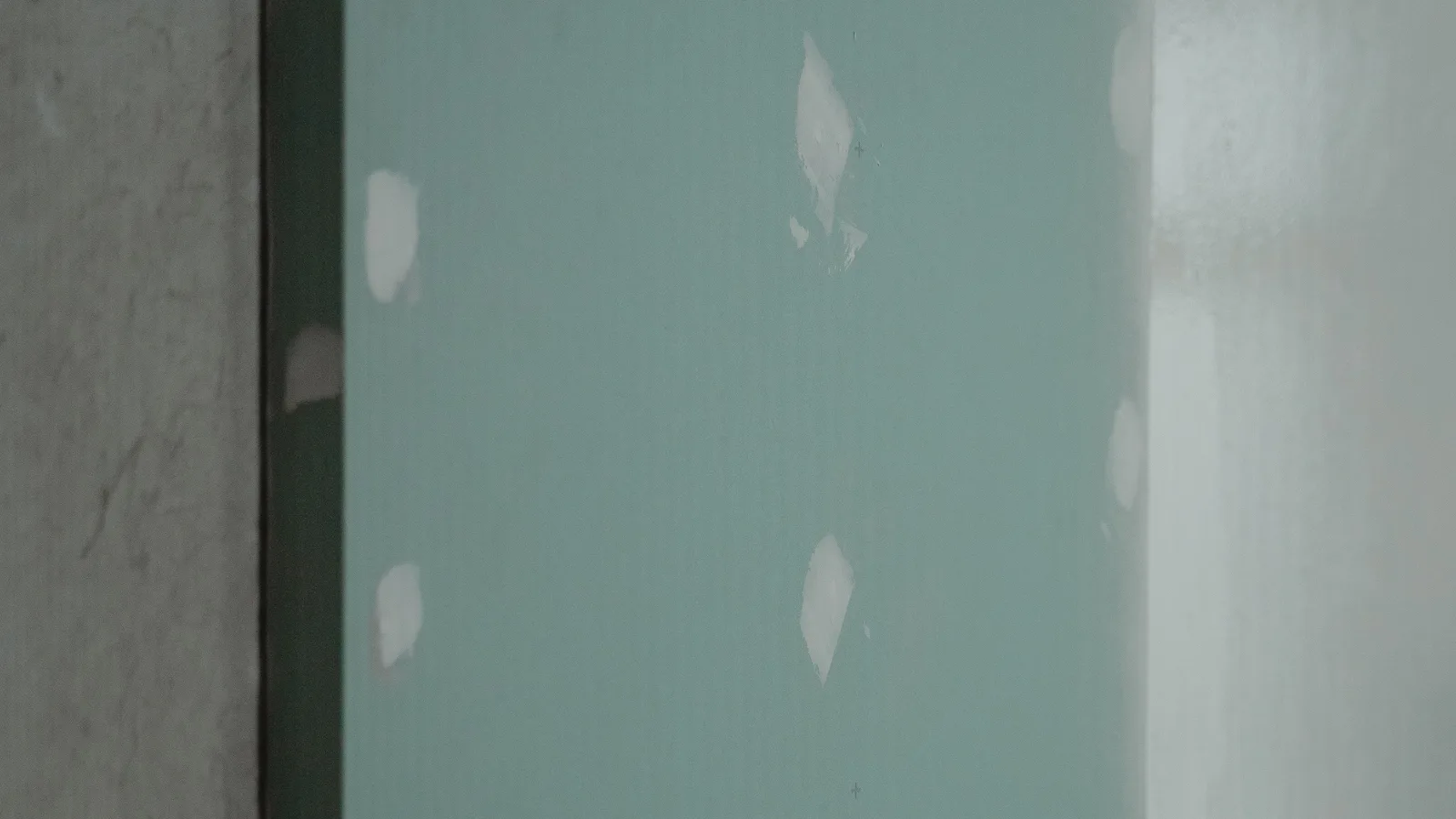
A fresh coat of paint doesn't cover a bad wall. It does the opposite: new paint, especially in eggshell or satin, catches the light evenly and makes every dent, lump and crooked patch stand out that the old, dirty flat paint was hiding. That's why every paint job we do starts with the walls, and why we do our own drywall rather than painting over someone else's. These are the repairs we see most in Clarksville homes and how each one is done properly.
Nail holes, pin holes and small dents. These are part of every paint job, no extra charge. Filled with lightweight spackle, sanded flush, spot-primed so the patch doesn't flash through the paint as a dull spot. The spot-priming is the step people skip; it's why you can sometimes see every picture hook on a repainted wall in the right light.
Doorknob holes and fist-sized damage. Anything bigger than a couple of inches needs backing — the compound has nothing to hold onto in open air. We cut the hole square, screw a strip of wood or a drywall clip inside the edges, fit a new piece of drywall, tape the seams with mesh or paper tape, and skim three coats of compound out wide enough that the edges feather to nothing. Then sand, prime, paint. Done right, you cannot find it afterward. The self-adhesive metal patches from the hardware store are the ones we usually end up redoing, because they leave a raised square you can see from across the room.
Cracks. Where the crack is tells you what caused it. A hairline crack running from the corner of a door or window frame is the house settling and moving with the seasons — normal in Tennessee, where the clay soil swells and shrinks. It's cut out slightly, taped and skimmed, and it usually stays closed. A crack along a straight line is a drywall seam whose tape has let go; the old tape comes out and it's re-taped. A crack that reopens every year or that's wide enough to fit a coin into is a structural question, and we'll tell you to have it looked at rather than just filling it again.
Water damage. A brown ring on a ceiling means water got in at some point — a roof leak, a bathroom above, a burst line. The stain itself will bleed through ordinary paint no matter how many coats, so it gets a stain-blocking primer. But if the drywall is soft, sagging or crumbly, it's been wet enough to lose its strength and it comes out; a new piece goes in and is finished flush. And the leak has to be fixed first. We'll repair a ceiling before the roofer has been, but we won't pretend the stain won't come back.
Texture. Most walls in newer Clarksville subdivisions have an orange-peel or knockdown texture, and a smooth patch on a textured wall is as obvious as a hole. We match the texture — sprayed or hand-applied, then knocked down if that's what the wall has — and blend it out past the repair, so once it's painted the patch has no edge.
Loose tape, bubbles and old bad patches. Common in houses that were flipped in a hurry. Tape that's lifting is cut out and replaced, not spackled over. Old patches that stand proud of the wall are sanded down or cut out and redone. This is the slow, unglamorous part of prepping a house for paint, and it's the reason our finished walls look flat in raking light.
If your walls need more than nail-hole filling, tell us at the estimate — or just point at the damage when we walk through. God Bless Painting repairs and paints in the same visit across Clarksville, Hopkinsville, Dickson, Erin, Nashville, Hermitage and Paducah. Call or text (931) 237-6075 for a free estimate.